Publish your prices, and show where they came from
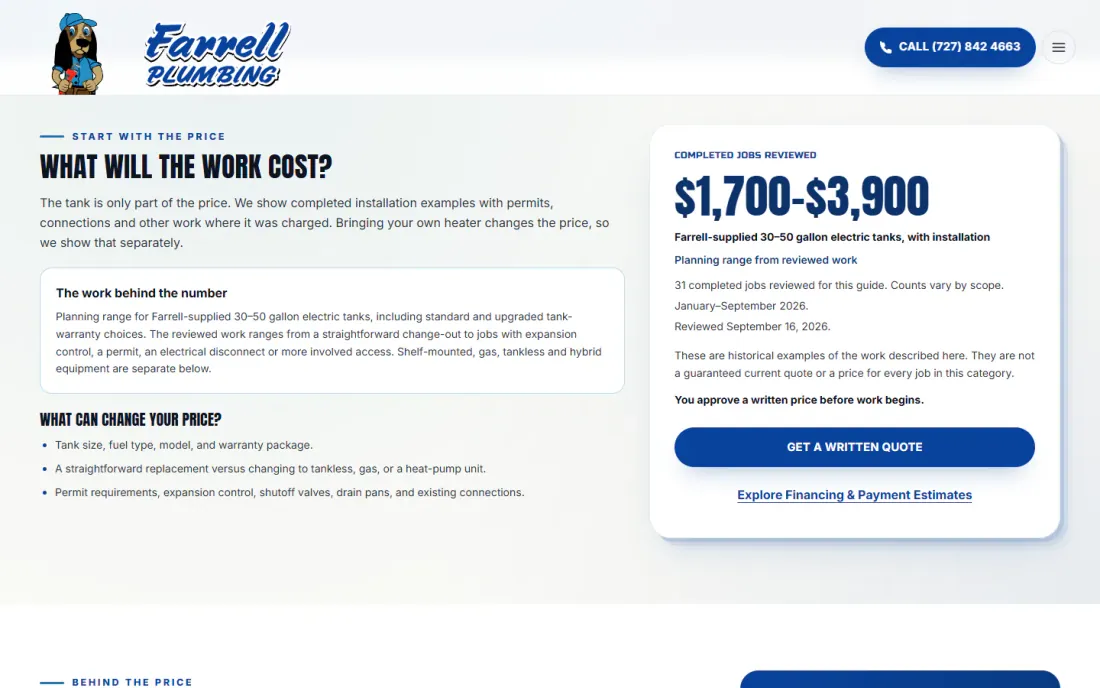
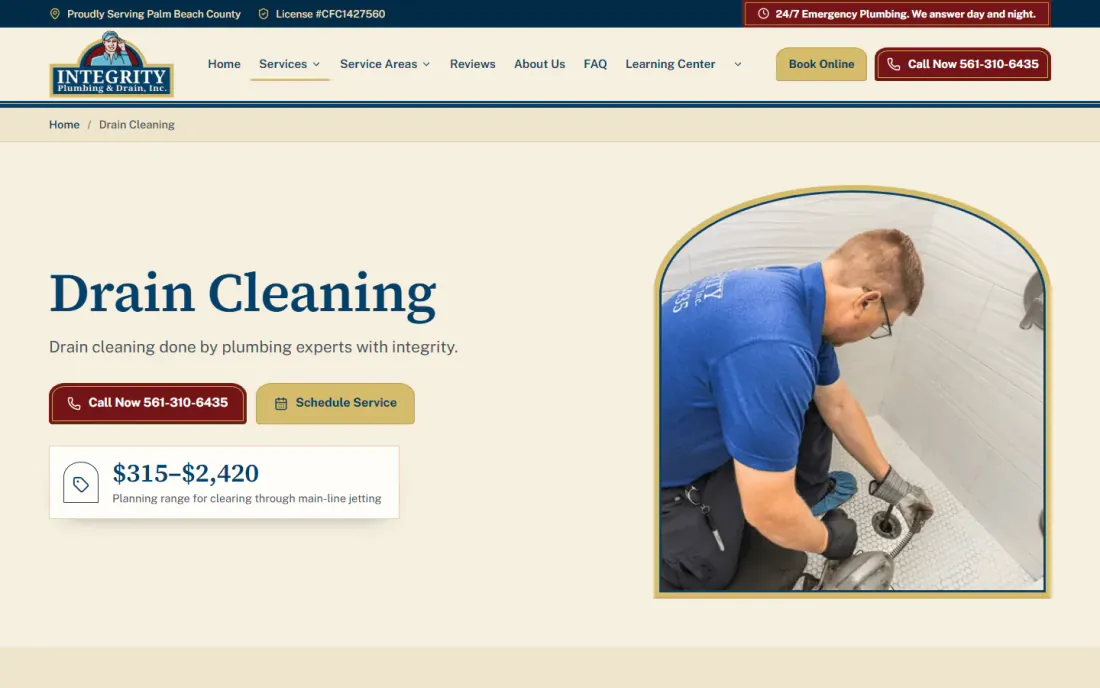
Price is the question every caller asks, and most plumbing sites dodge it. Both plumbing sites we run answer it. Farrell Plumbing publishes 11 cost guides. Each one shows a price range, how many completed jobs were reviewed to set it, the dates of those jobs and the day the guide was last checked. The water heater installation guide, for example, rests on 31 completed jobs. Integrity Plumbing & Drain puts a planning range at the top of each of its 16 service pages, backed by 16 guides and a pricing hub.
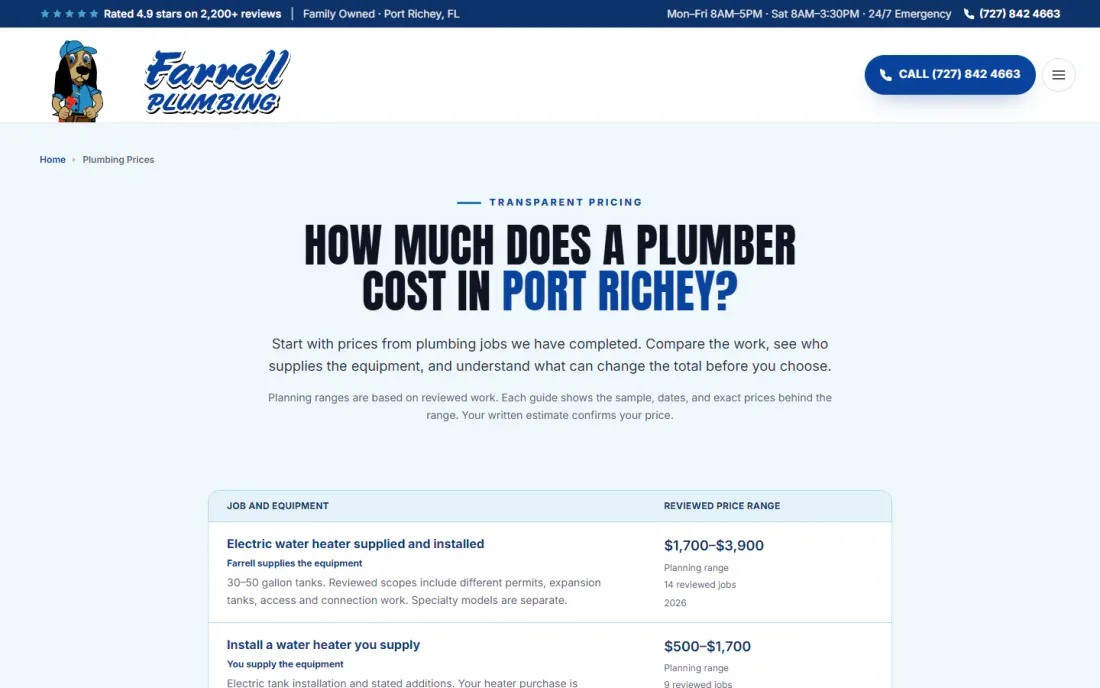
Why it works: a person searching “water heater replacement cost port richey” is going to call somebody. The shop that answers the question gets the call, from a caller who already knows the range. It also gives Google a page that matches a cost search, which a plain service page does not. Two rules keep it honest: say who supplies the equipment, and say that the written estimate sets the final price.
Google Business Profile for plumbers
For emergency and “near me” searches, the map pack gets the call before your website loads. The profile is the most important page you own, and it is not on your site.
- Categories. Your primary category should be Plumber. Add secondary categories only for work a customer can hire you for on its own, such as Drainage service or Septic system service. Google’s list changes, so we check it live in the profile editor.
- Name. Use your real business name. Google’s guidelines do not allow extra keywords or a city in the name unless they are part of the real name. Competitors who stuff their names are worth reporting.
- Offices. A second office with its own staff can have its own profile. Farrell Plumbing runs offices in Port Richey, Spring Hill and Palm Harbor, and its site marks up each one as its own plumber location.
- Hours and photos. Set hours to what the phones really do. Post real photos of your vans, techs and finished work.
The full routine is part of our Google Business Profile optimization, and our weekly profile routine shows the 15 minutes a week an owner can do alone.
Reviews: count, recency and replies
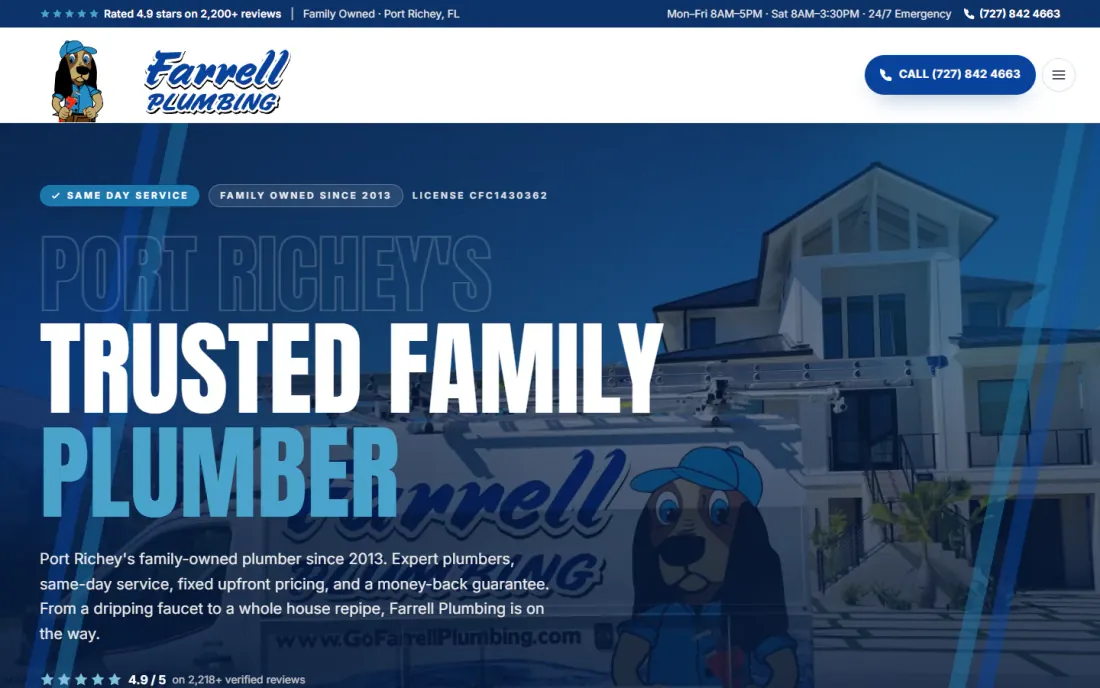
Reviews carry extra weight for plumbers, because the customer is letting a stranger into the house, often in a hurry. Three things matter: how many, how recent and whether you answer them. Farrell Plumbing’s site shows 4.9 out of 5 on 2,218+ verified reviews, and Integrity’s shows 350+ Google reviews, right where a new customer looks first.
Ask every customer, the same day, by text. Keep the ask plain. Google’s review policy does not allow incentives, does not allow asking only the happy customers, and says a business should not request specific content, which includes asking a customer to name the tech. Ask for an honest review and leave the words to them. Then answer every review, good and bad. A calm reply to a one-star review is read by everyone who finds you after it.
Local Services Ads for plumbers
Local Services Ads sit above the map pack on many plumbing searches, and you pay per lead instead of per click. Plumbers are one of the trades Google accepts, and the business has to pass Google’s license, insurance and background checks first.
LSA is the fastest way to make the phone ring while SEO builds. Two cautions. Every lead is charged whether it books or not, so match each one to a job and dispute the ones that should not count. And LSA is rented. Stop paying and the calls stop, while the pages and reviews you build for SEO stay yours. We run both through our Local Services Ads management, and our post on LSA versus Google Ads covers how to split a budget.
What happens after the phone rings
Plumbing calls come in three kinds: the emergency, the price shopper and the repair that needs a time slot. SEO fills the phone. Whoever answers decides whether the call becomes a job.
We put a tracking number on every source and match calls to jobs in Housecall Pro, so the monthly report shows which calls booked. When a source brings calls that do not book, the problem is sometimes the page and sometimes the phone, and the recordings tell you which. Our call tracking guide explains the setup.
For price shoppers, the best answer is a range and a reason to book the visit, not a refusal. Our guide to price shopper calls walks through it, and our plumbing CSR training lets your office practice those calls with an AI caller before a real one rings.
Florida details that belong on a plumbing site
A Florida plumbing site should carry facts a national template does not. We check each one against its source before it goes live.
- The license. Florida certified plumbing contractors hold a license number that starts with CFC. A registered contractor holds an RF license that is good only where it was issued. Florida law says the license number must appear in every advertisement, so it goes on every page. Both plumbing sites we run show theirs.
- The 4-point inspection. Citizens Property Insurance asks for a 4-point inspection on homes more than 20 years old, covering the roof, electrical, heating and cooling, and plumbing, and its form lets a licensed plumber sign off on the plumbing section. Other carriers set their own rules. A page on what fails the plumbing section helps homeowners and their agents.
- Permits. Water heater changeouts, repipes and sewer replacements are permitted work in Pasco and Hernando. Saying so on the page, and putting the permit number on the invoice, is a trust signal that costs nothing.
- Hurricane season. It runs June 1 to November 30. Posts on shutting off the water, protecting the water heater and what to do after a boil water notice belong online in May, not after a storm has a name.
Pages that carry facts like these could not be pasted onto a plumber’s site in Ohio. That is the point. If you work in our home market, see how we approach SEO in New Port Richey and Port Richey and SEO in Spring Hill.