1. A Google Business Profile that matches the business
For a business with a door customers walk through, the profile is often the first thing a new customer sees, before the website. Google’s guidelines say to choose the fewest categories it takes to describe the core business, so the primary category should name what you are, as specifically as Google’s list allows. The 3030 Suites building is listed on Google Maps as an Executive suite rental agency, which is exactly what it is.
- Details that match. The name, street address, phone number and hours on the profile should match the website word for word.
- Hours that are true. List the hours a customer can walk in and get help, and keep holiday hours current.
- Photos of the real place. The entrance, the rooms, the parking lot, the sign. Nothing stock.
- Reviews from every customer. Ask everyone, and keep to Google’s review policy: no incentives, and no asking only the happy ones.
The full routine is part of our Google Business Profile optimization, and our Business Profile guide covers it step by step.
2. A page for each thing you sell
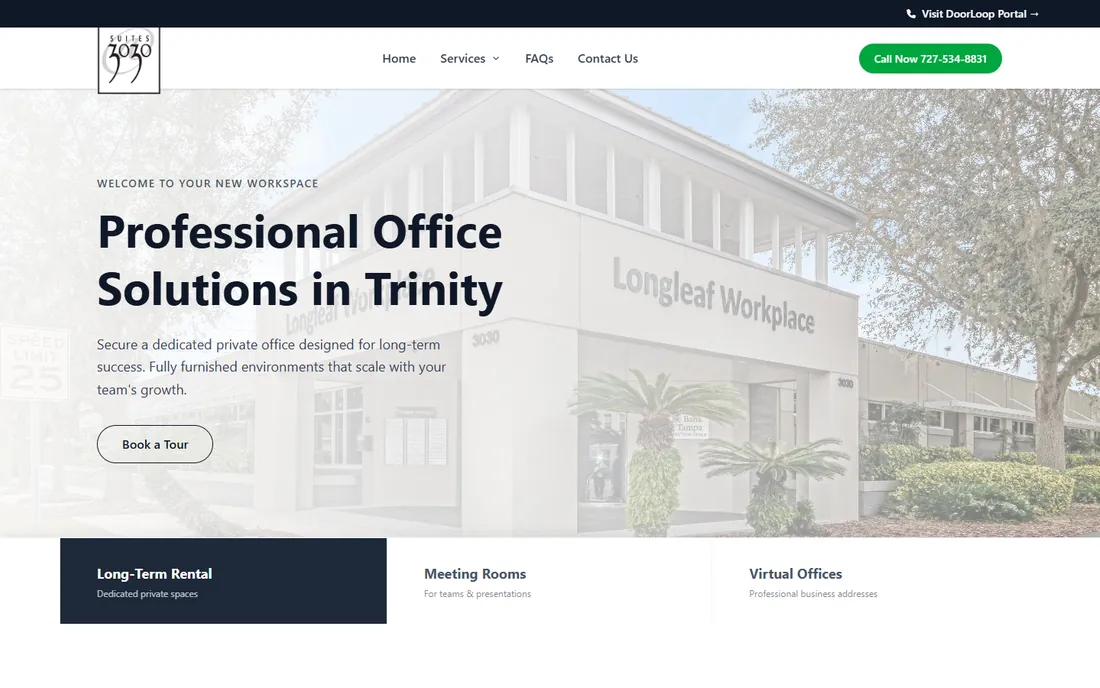
Most small business sites have one Services page with a bullet list. The customer and Google both do better with a page for each service, written in the words people search, with the service and the town in the title tag. 3030 Suites rents space three ways, so its site has three rental pages: long-term offices, conference rooms and virtual offices. The long-term page is titled Private Furnished Offices for Rent in Trinity.
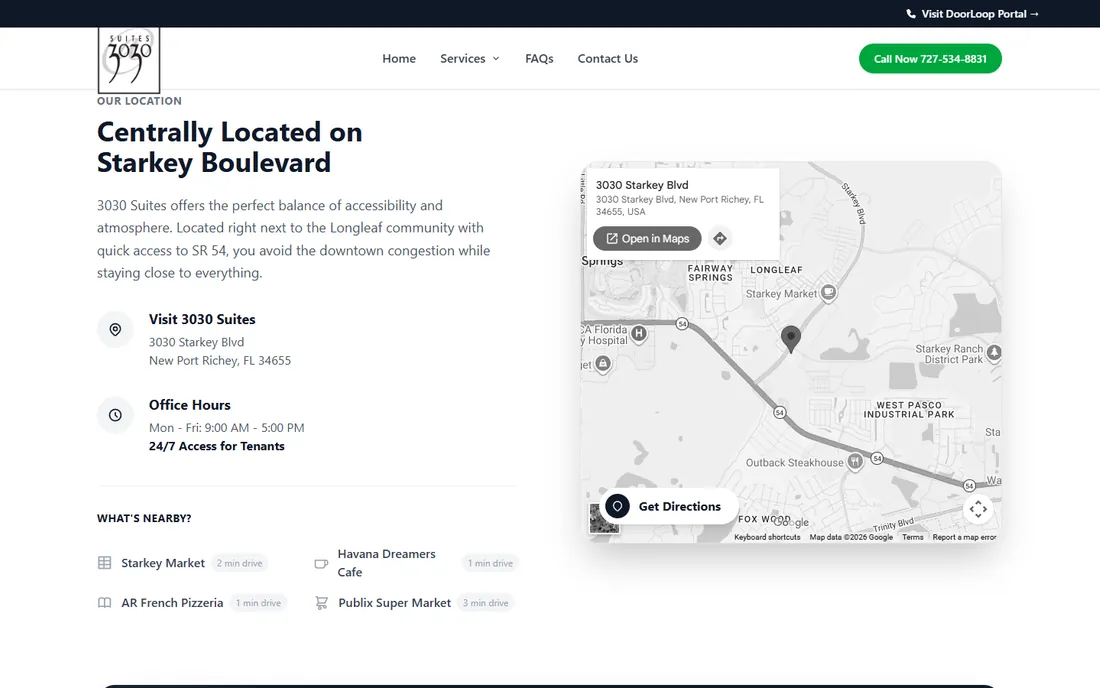
Whether you also need town pages depends on how you work. A business that drives to its customers, like a plumber or a mobile pet groomer, needs a page for each real town it serves. A business that customers drive to needs one strong location section instead: the street, the roads people take to get there, nearby landmarks, the hours, a map and a directions link. 3030 Suites is the second kind. Its home page names Starkey Boulevard, State Road 54 and the Longleaf community, and lists four nearby stops with drive times.
If your current site cannot hold these pages, our small business web design starts from this list.
3. A phone number that shows where each call came from
Call tracking gives each source its own number: the Business Profile, the website, Google Ads and anything else you pay for. Every call then arrives with its source, the time and a recording, so you can hear what people asked for. On the Business Profile, the tracking number goes in as the main number and your regular number stays on the listing as an additional phone, so the details still match everywhere else your name appears. Our post on call tracking covers the setup, and our post on missed calls shows how to put a price on the ones that ring out.
4. Count the customers who booked
Counting starts with clicks and calls, but the number that matters is how many of those callers became customers: a tour that turned into a lease, a consultation that turned into a client, an appointment that was kept. Each month we match calls to customers and divide what you spent on each source by the customers it brought in. That number, the cost per booked customer, tells you what to keep and what to cut.
Our post on cost per booked job walks through the math with trade numbers, and it works the same way for any business. Our post on booking rate explains why answering the phone well can beat a bigger ad budget.
What changes outside the trades
The sale takes longer
A broken water heater gets a plumber the same day. A business choosing an office tours two or three buildings first. Pages have to answer the questions people ask while they compare: what the rent covers, the lease terms, parking, after-hours access. The 3030 Suites FAQ page answers seven of those before anyone has to call.
A booking is not always a job
It might be a tour, a consultation, a class or an appointment. We agree with you on what counts as a booked customer before we start, so the report counts the right thing.
Local Services Ads may not be open to you
Google’s Local Services Ads cover a set list of business types. If yours is not on the list, the paid side of the work is regular Google Ads, and the Business Profile and the site carry more of the load.